Lakshmi Venu Initiates Legal Action for TVS Inheritance Rights
The ongoing legal dispute within the TVS family centers on inheritance rights, with prominent advocates presenting opposing views.
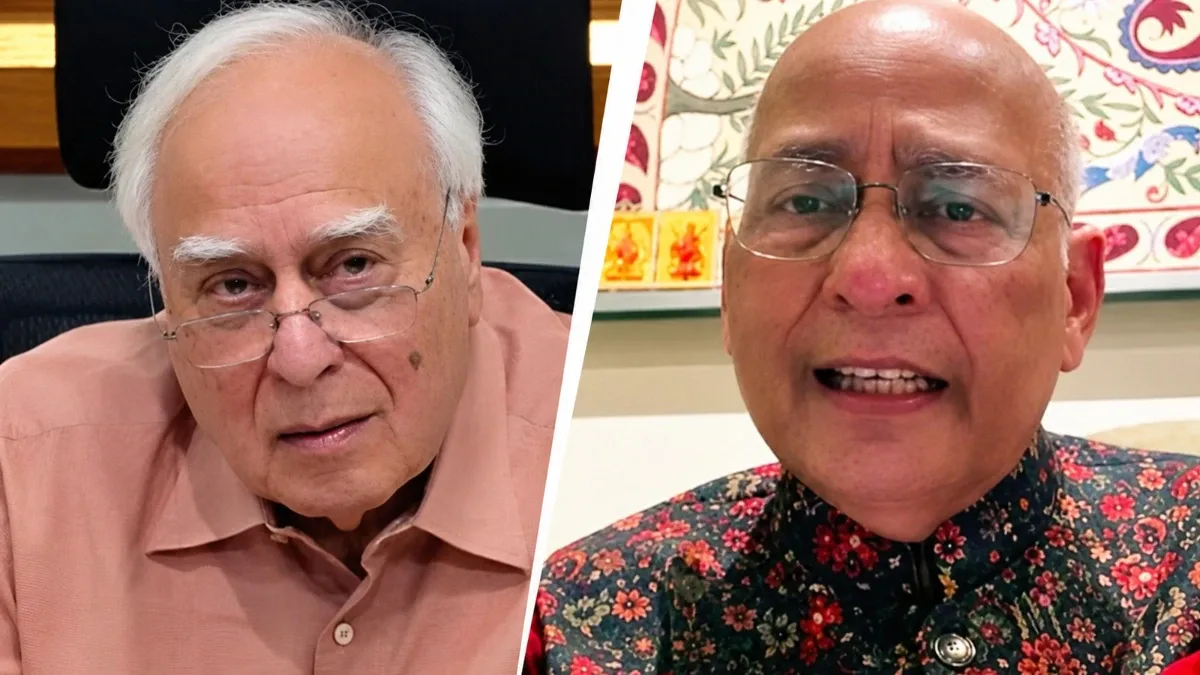
Lakshmi Venu seeks equal share of TVS family assets amid legal dispute.
Kapil Sibal and Abhishek Manu Singhvi represent opposing sides in the case.
The case raises critical questions about women's inheritance rights in family businesses.
Lakshmi Venu, daughter of Venu Srinivasan, has initiated legal proceedings to claim her share of the TVS family assets, igniting a significant dispute over inheritance rights. The case has drawn attention from senior advocates Kapil Sibal and Abhishek Manu Singhvi, who are representing opposing sides in this family matter. The core issue revolves around whether Venu Srinivasan can treat the family business assets as his personal property and how they should be divided between his children.
The conflict stems from Lakshmi's notice for partition, which seeks an equal division of the family's wealth under the Hindu Succession Act. While her mother, Mallika Srinivasan, supports her claim, Venu Srinivasan asserts that the assets were fairly allocated after discussions with family members. The legal arguments have highlighted differing interpretations of women's rights in inheritance, particularly in the context of family businesses.
Sibal has criticized the allocation of 95% of the family business to Lakshmi's brother, Sudarshan Venu, arguing that such a distribution is unjust. He emphasized that the family business, established in 1911, should not be viewed as solely Venu Srinivasan's personal property. Citing legal amendments that recognize daughters as equal heirs, Sibal urged Venu to ensure a fair distribution of assets, stating that the family business is a collective legacy rather than an individual possession.
On the other hand, Singhvi, representing Venu Srinivasan, contends that the family reached a written settlement in 2017 regarding the division of ancestral property. He argues that the patriarch has the right to manage self-acquired assets as he sees fit and that the previous agreements should not be revisited simply due to dissatisfaction with the current distribution. Singhvi maintains that the arrangement allows for the tractor business to benefit Lakshmi's family, despite her not being a direct beneficiary of the trust managing the assets.
As the legal battle unfolds, the implications of this case extend beyond the family, raising broader questions about inheritance rights and the treatment of women in business families in India. The court's decisions will likely set precedents regarding the equitable distribution of inherited wealth and the rights of daughters in family-owned enterprises.