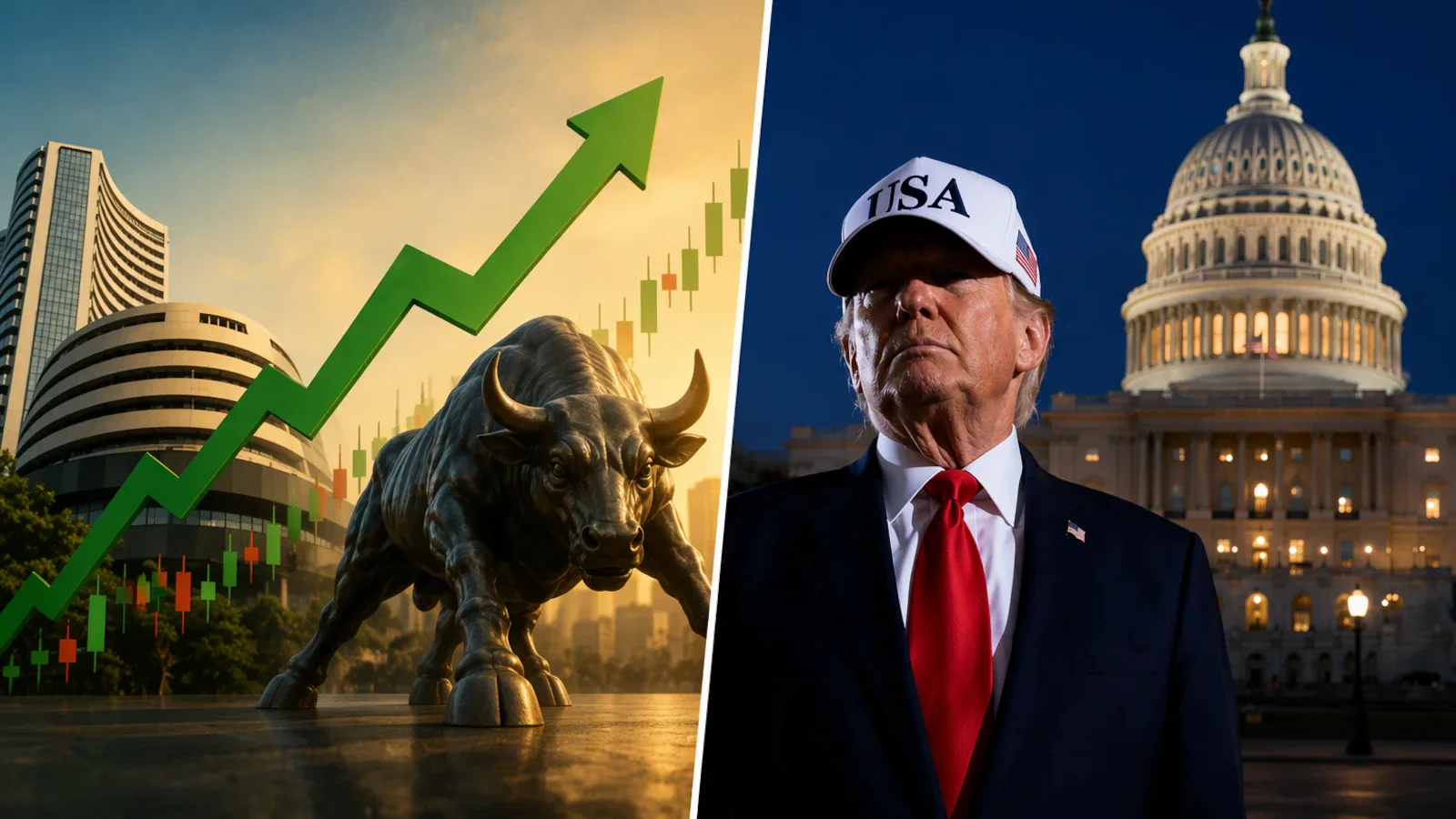
Indian Stock Market Surges 5.6% Following US Midterm Elections
The Indian stock market experiences a significant rally, driven by the Democratic victory in the US midterms, leading to optimism among investors.

Nifty index rises 5.6% over five trading sessions post-elections.
Foreign portfolio investors purchased equities worth Rs 7,284 crore on November 4.
Lower oil prices and easing global conditions signal potential economic recovery.
The Indian stock market has reacted positively to the recent US midterm elections, which saw the Democratic Party gain control of both chambers of Congress. This shift has led to a notable rally in Indian equities, with the Nifty index climbing 5.6% over five trading sessions leading up to November 4. The market's response reflects a broader optimism regarding the economic landscape, as foreign investors have also resumed buying, purchasing equities worth Rs 7,284 crore on the same day.
The backdrop of this market surge is rooted in the implications of a weakened Trump administration. With the Democrats in control, there is an expectation of reduced fiscal expansion and a more cautious approach to foreign policy and trade. For India, which has been grappling with high oil prices and tariff uncertainties, this political shift could signal a more stable macroeconomic environment. The Nifty index opened 1.66% higher on Thursday, reaching a near three-month high, as investors responded to these favorable developments.
One of the most immediate benefits for India is the potential reduction in crude oil prices, which have already begun to decline sharply. Brent crude fell below $94 a barrel, a significant drop from its October highs. This decrease is crucial for India, where the oil import bill had surged approximately 24% year-to-date. Analysts suggest that a sustained decline in oil prices could alleviate imported inflation, improve the current account balance, and provide the Reserve Bank of India with more flexibility in monetary policy.
The implications of the Democratic victory extend beyond just oil prices. A less aggressive US trade policy could ease tensions that have previously strained India-US relations. The new political landscape may create a more favorable environment for trade negotiations, although immediate changes to tariffs and immigration policies are not expected. The election results may alter the political incentives for the US administration, potentially reducing the risk of new trade disputes.
Looking ahead, the Indian market's prospects appear more promising, bolstered by signs of recovering corporate earnings and favorable external conditions. Analysts have noted a 33% year-on-year increase in net profits for companies in the July-September quarter. While risks remain, including the potential for renewed trade tensions and the US fiscal trajectory, the balance of risks seems to have shifted in favor of Indian equities, setting the stage for a more sustainable market recovery.