India Prohibits Export of Lithium-Ion Battery Waste
The DGFT has banned the export of lithium-ion battery waste to bolster domestic recycling efforts.
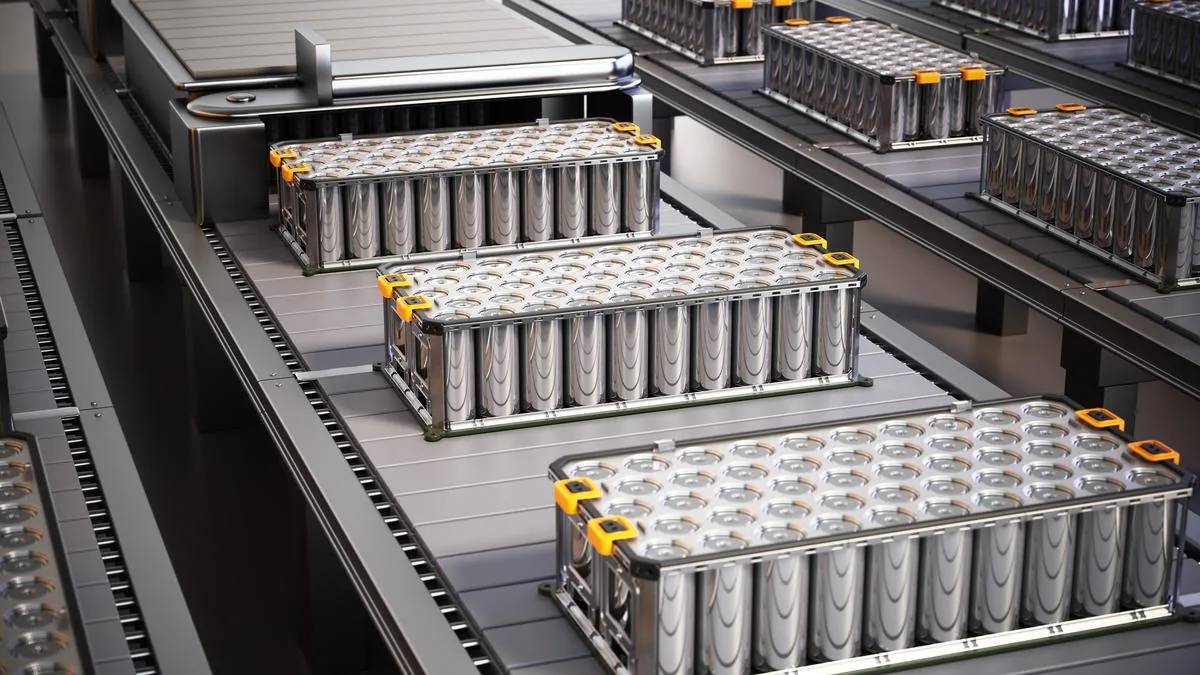
Export of lithium-ion battery waste and scrap is now prohibited.
The ban aims to enhance domestic recycling of critical minerals.
India generates an estimated 30,000 tonnes of black mass annually from e-waste.
In a significant move for India's mineral recycling sector, the Directorate General of Foreign Trade (DGFT) has announced an immediate ban on the export of waste and scrap from lithium-ion batteries and electric accumulators. This decision, made public on November 11, 2026, is expected to strengthen the domestic recycling industry by ensuring that valuable materials are retained within the country.
The term 'black mass' refers to the powdered mixture of essential minerals such as lithium, nickel, manganese, cobalt, and graphite, which is recovered during the recycling process of lithium-ion batteries. These minerals are crucial for India's growing electronic, electric vehicle, and renewable energy sectors, making their domestic recovery imperative.
The Material Recycling Association of India (MRAI) welcomed the DGFT's announcement, emphasizing that this ban would provide local recyclers and critical mineral processors with better access to necessary feedstock. The association stated that this initiative is a vital step towards enhancing India's resource security and promoting investment in local recycling capabilities, thus contributing to a self-reliant circular economy.
Industry estimates indicate that India generates approximately 3.2 million tonnes of electronic waste each year, which includes around 70,000 tonnes of end-of-life batteries. From this waste, it is projected that about 30,000 tonnes of black mass could be produced annually, underscoring the importance of retaining these materials for domestic processing.
Looking ahead, the implementation of this ban is expected to encourage further investments in the recycling sector and support the development of sustainable practices within the industry. The DGFT's decision marks a pivotal moment in India's journey towards a more self-sufficient and environmentally friendly economy.