Gold ETF Holdings Reach Yearly Highs Amid Inflation Pressures
Despite rising inflation impacting gold and silver prices, ETF holdings for gold have surged to their highest levels in 2026.
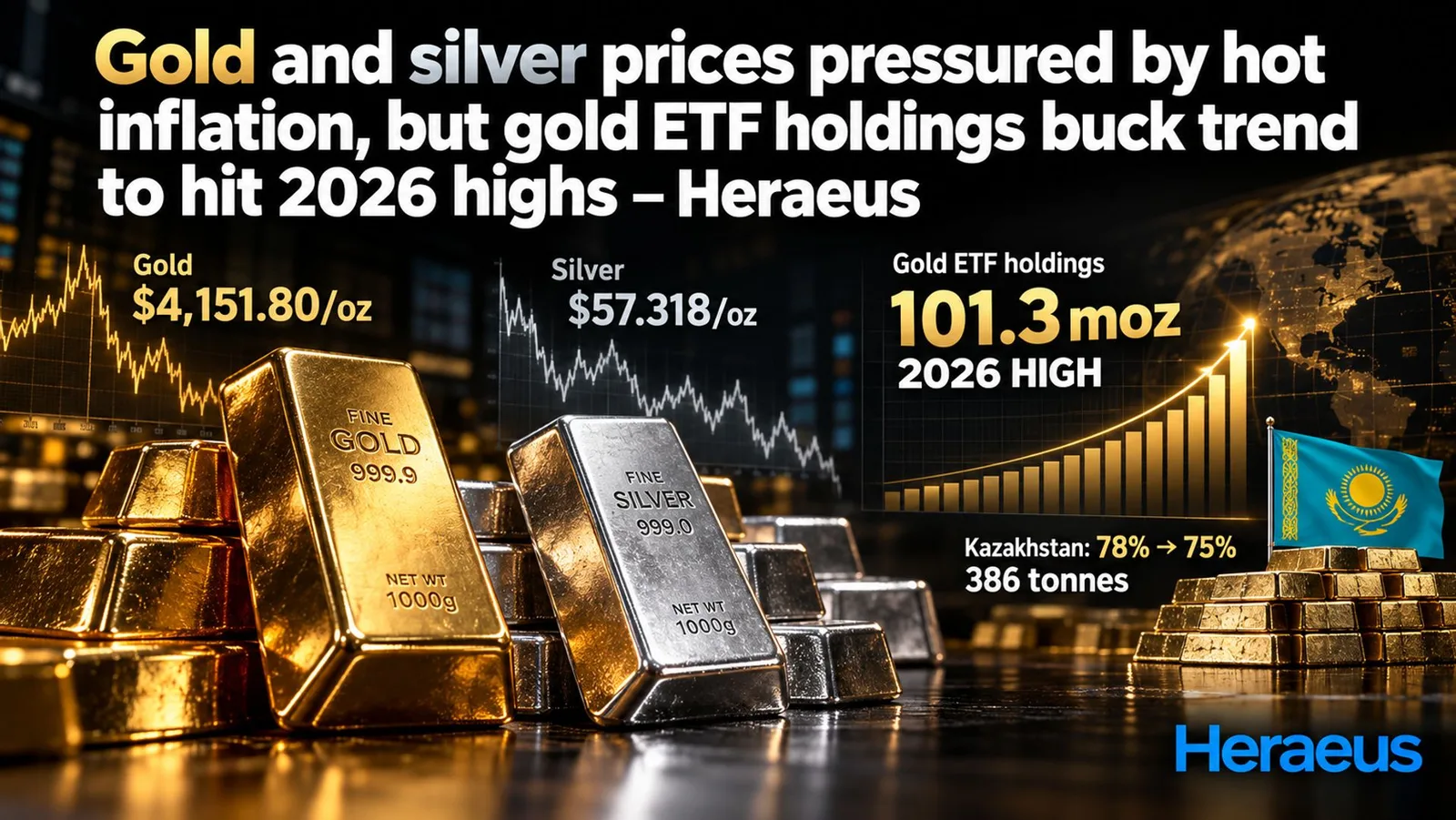
Gold ETF holdings peaked at 101.3 million ounces on October 8, 2026.
Kazakhstan's central bank plans to reduce its gold reserves from 78% to 75% by year-end.
India's import tax on precious metals has been clarified, affecting market dynamics.
Gold and silver prices have faced renewed pressure following last week's elevated Consumer Price Index (CPI) and Producer Price Index (PPI) reports. Despite this, demand for gold exchange-traded funds (ETFs) has notably increased, reaching annual highs. Analysts from Heraeus highlighted that gold managed to hold critical support levels even amidst challenging economic conditions, with prices fluctuating around $4,100 per ounce.
The analysts observed that gold briefly dipped below $4,100 following the release of the September CPI data, which triggered a hawkish market response, pushing Treasury yields and the dollar higher. However, this reaction has since moderated, leading to a recovery in gold prices as expectations for a Federal Reserve rate hike have diminished. As of now, gold ETF holdings have risen to 101.3 million ounces, marking a 5.3% increase from the year-to-date low recorded in July.
In a broader context, the National Bank of Kazakhstan, which was one of the largest sovereign buyers of gold in 2026, is planning to reduce its gold holdings from approximately 78% of its international reserves to 75% by the end of the year. This decision comes after the bank's gold reserves peaked at 386 tonnes. The reduction will involve both options and physical sales, as the bank seeks to diversify its portfolio amid rising U.S. Treasury yields.
The evolving import tax regulations in India are also influencing the demand for precious metals. The Indian government has confirmed that imports of silver, gold, and platinum by banks will be subject to a 3% Integrated Goods and Services Tax, effective from October 8. This clarification has removed uncertainties surrounding the tax, which had been a concern for banks since April. India imported 232 million ounces of silver in 2025, accounting for about 20% of global demand.
Looking ahead, market participants will be closely monitoring upcoming economic indicators and central bank meetings, particularly the Federal Reserve's meeting scheduled for October 28. The interplay between inflation data, interest rates, and precious metals demand will be crucial in shaping market trends in the coming weeks.