Federal Reserve Maintains Interest Rates Amid Economic Uncertainty
The Federal Reserve decided to keep interest rates steady, despite inflation pressures and upcoming midterm elections.
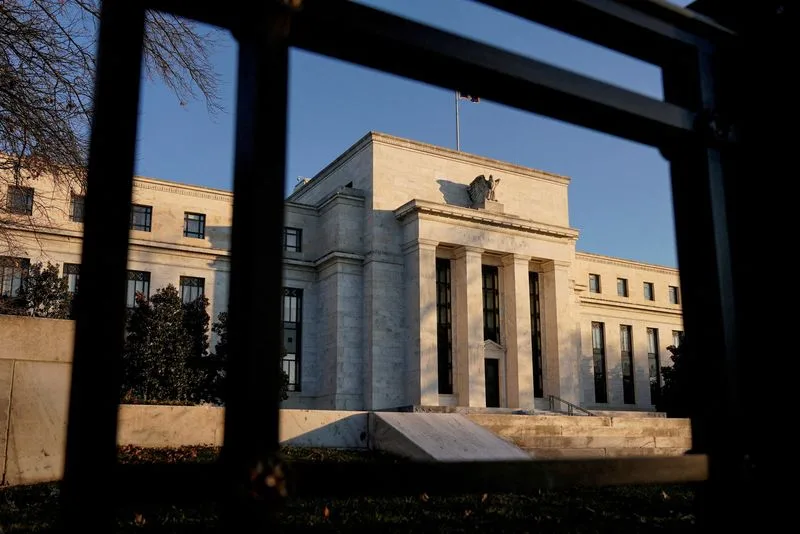
The Federal Reserve held the federal funds rate at 3.75%-4.00%.
Two policymakers advocated for a 25 basis points increase.
Upcoming economic data will influence future rate decisions.
On Wednesday, the Federal Reserve opted to maintain interest rates at 3.75%-4.00%, a decision anticipated by many analysts. This choice comes at a challenging time for the central bank, which is facing rising oil prices, increased borrowing costs, and concerns about spending driven by artificial intelligence, all while the U.S. midterm elections loom.
During a press conference following the decision, Fed Chair Kevin Warsh highlighted that employment conditions were showing positive trends. He noted that the Federal Open Market Committee (FOMC) concentrated its discussions primarily on inflation, acknowledging a tightening of financial conditions since their last meeting in September.
The FOMC's vote was 10-2 in favor of holding rates steady, with Governor Lisa Cook and Cleveland Fed President Beth Hammack advocating for a quarter-point increase. The committee had previously raised rates by 25 basis points in September, marking a significant shift in monetary policy since July 2023. The FOMC's statement emphasized that while economic activity remains strong, inflation continues to be a concern, with the goal of returning it to 2%.
Despite recent inflation data that exceeded expectations, the Fed chose to keep rates unchanged. The U.S. consumer price index (CPI) rose by 3.7% year-over-year in September, with core CPI increasing by 2.6%. These figures were higher than the previous month and above the Fed's long-term target. The FOMC prefers to monitor the personal consumption expenditures (PCE) price index, which also showed a year-over-year increase of 3.4%.
Looking ahead, the Fed is expected to assess more economic data, including Q3 GDP figures and PCE readings, which will be released soon. Warsh indicated that the upcoming period is rich in information that will help determine future policy directions. Additionally, he mentioned a change in the FOMC's meeting schedule for 2027 and 2028, with a focus on monetary policy strategy in one of the meetings next year. Warsh dismissed the idea that political factors influenced the rate decision, stating that politics played no role in their deliberations.