Federal Reserve Expected to Hold Rates Steady Ahead of December Meeting
The Federal Reserve is likely to maintain its current interest rates during the upcoming meeting, with potential dissenters hinting at future policy directions.
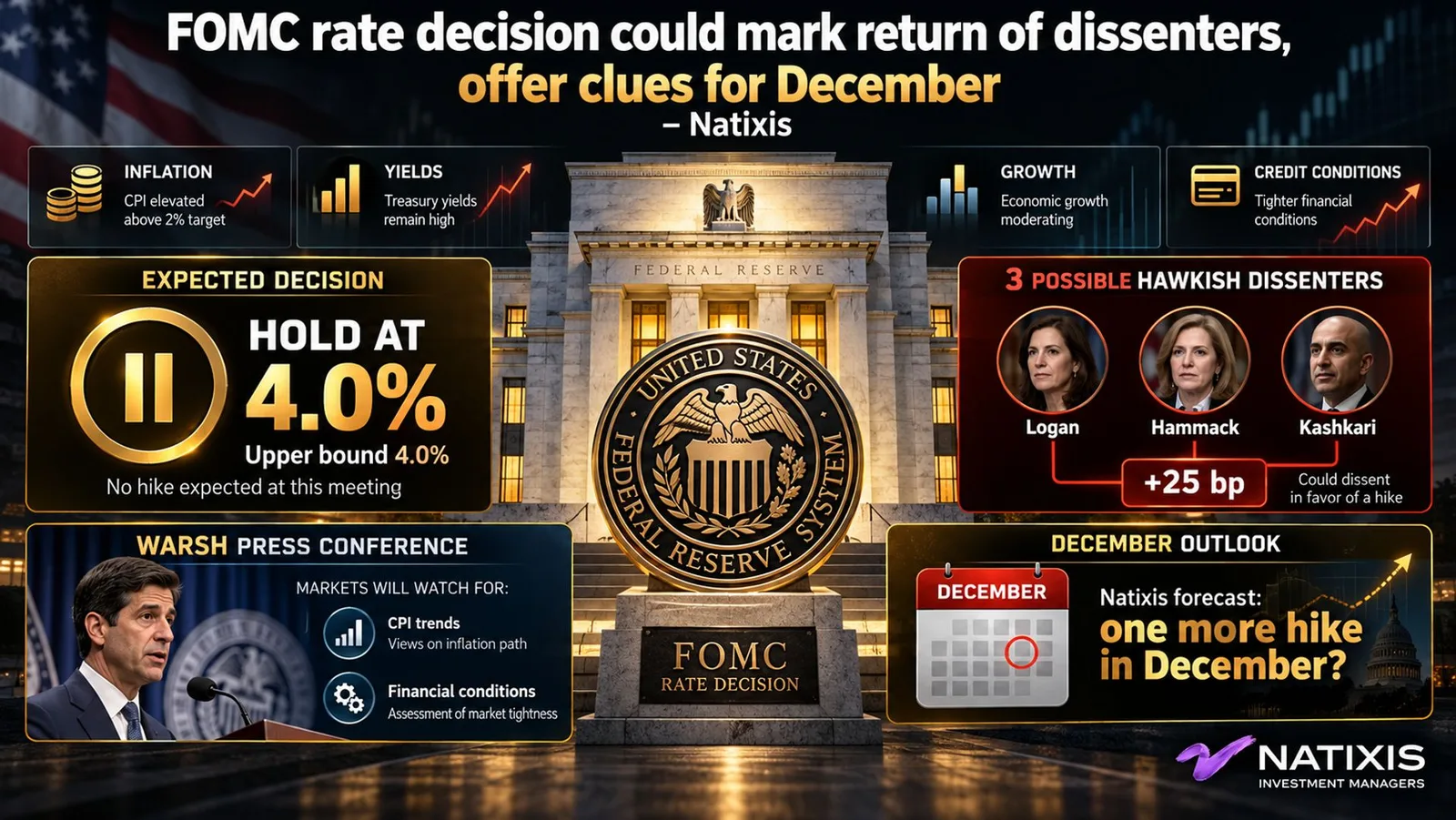
Economists predict the Fed will keep rates at 4.0% during Wednesday's meeting.
Dissent from July's meeting may resurface, with some officials advocating for a rate hike.
Future inflation trends and economic growth will heavily influence the Fed's decisions.
In anticipation of the Federal Reserve's upcoming meeting on Wednesday, analysts suggest that the central bank is unlikely to implement a surprise interest rate hike. According to economists from Natixis, the Fed is expected to maintain its policy rate at an upper limit of 4.0%. This decision comes after a recent increase in September, marking the first hike in three years. The focus now shifts to the potential return of dissenting voices from the July meeting, which could provide insights into the Fed's future monetary policy direction.
The backdrop to this meeting reveals a mixed messaging from Fed officials regarding monetary policy. While some members, including Collins, Paulson, and Hammack, appear to support further rate increases, others like Jefferson, Williams, and Waller seem to advocate for a more cautious approach. Fed Chair Warsh has maintained a neutral stance, which may influence the discussions during his press conference following the meeting. Economists Hodge and Aker believe that while a surprise hike is possible, it is unlikely given the current economic conditions.
During the press conference, analysts will be keen to observe Warsh's comments on recent economic indicators, particularly the Consumer Price Index (CPI) report. They anticipate that Warsh will emphasize a focus on broader trends rather than individual data points, allowing the Fed flexibility in its policy decisions. Additionally, discussions around financial conditions are expected, with the potential for Warsh to highlight the dual risks the Fed faces in maintaining stability without overly tightening monetary policy.
The implications of the Fed's decisions extend beyond immediate interest rates. With inflation remaining a critical concern, the Fed's approach will be closely monitored by markets and policymakers alike. The economists from Natixis express cautious optimism regarding inflation trends, suggesting that if certain pressures, such as tariffs and energy costs, diminish, core inflation may begin to decline. However, they caution that low consumer confidence and stagnant wage growth could hinder economic activity.
Looking ahead, the Fed is expected to remain vigilant regarding inflation and growth forecasts. The economists predict only one more rate hike in this cycle, likely occurring during the December meeting, contingent on favorable inflation data and ongoing concerns about economic growth. As the Fed navigates these challenges, its decisions will play a pivotal role in shaping the economic landscape in the coming months.