China's Economy Grows 4.5% in Q3 Amid AI Export Surge
China's economic growth rebounds to 4.5% in the third quarter, driven by a boom in AI-related exports despite domestic challenges.
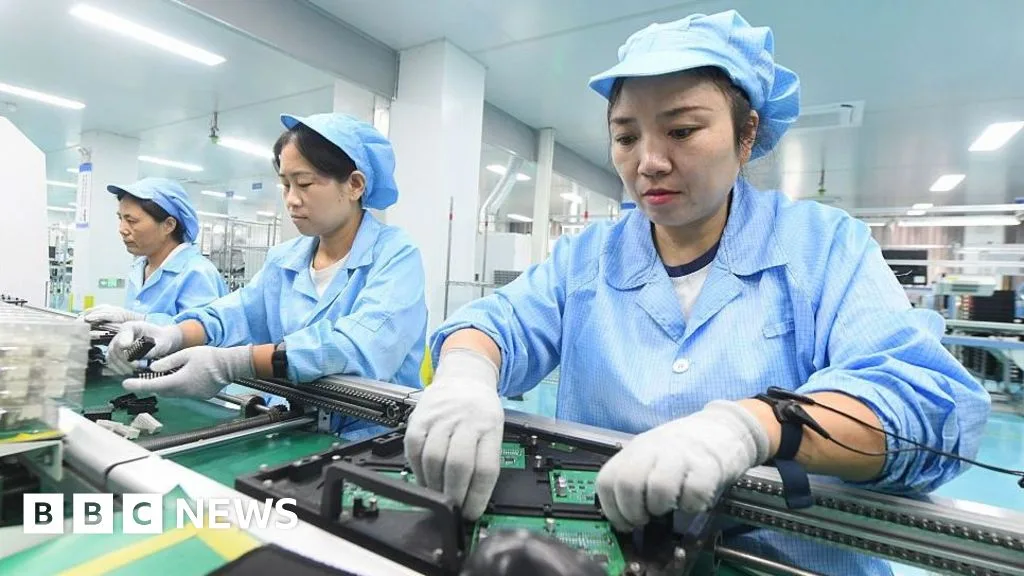
China's GDP rose by 4.5% in Q3 2026, recovering from a three-year low.
Exports, particularly in AI technology, are boosting growth amid weak domestic spending.
Concerns remain over property investment decline and geopolitical trade tensions.
China's economy experienced a notable recovery in the third quarter of 2026, with growth reaching 4.5%, a significant improvement from previous lows. This growth surge is largely attributed to the booming artificial intelligence (AI) sector, which has bolstered exports, despite ongoing weaknesses in domestic consumption. The latest figures, released by China's National Bureau of Statistics, highlight a rebound from the three-year low recorded earlier, although the growth rate remains at the lower end of the government's annual target of 4.5% to 5%.
Historically, China's economy has faced numerous challenges, particularly in the real estate sector, which has been in decline due to excessive borrowing and overbuilding by developers. The recent growth is a response to these challenges, as the government seeks to stimulate the economy through various measures. While exports have provided a cushion against weak domestic spending, analysts warn that global trade tensions and uncertainties surrounding AI investments could pose risks to this recovery.
Key data indicates that China's trade surplus is on track to surpass last year's record of $1.2 trillion, driven by increased demand for high-tech exports, particularly in manufacturing and AI-related products. However, the property investment sector has seen a significant decline, dropping over 20% compared to the same period last year. Experts, including Sheana Yue from Oxford Economics, note that while manufacturing exports are thriving, domestic investment and consumer spending remain sluggish, contributing to a more pessimistic outlook among Chinese consumers.
The implications of these developments are significant for both China and the global economy. As the technology sector continues to drive growth, the reliance on exports may become a double-edged sword, especially as Western economies express concerns over competition from inexpensive Chinese goods. Additionally, the ongoing property slump and high youth unemployment could hinder domestic economic stability, leading to a cautious consumer base.
Looking ahead, the Chinese government has introduced a series of support measures, including interest rate cuts and subsidies for property buyers, to stimulate economic activity. However, the effectiveness of these measures remains to be seen, particularly in light of the geopolitical challenges and the uncertain future of AI investments. As China navigates these complexities, the balance between fostering growth and addressing domestic weaknesses will be crucial for its economic trajectory in the coming months.