Anthropic's IPO: A Deep Dive into Financial Dynamics
Anthropic's recent IPO prospectus reveals significant revenue growth but substantial losses, raising questions about its financial sustainability.
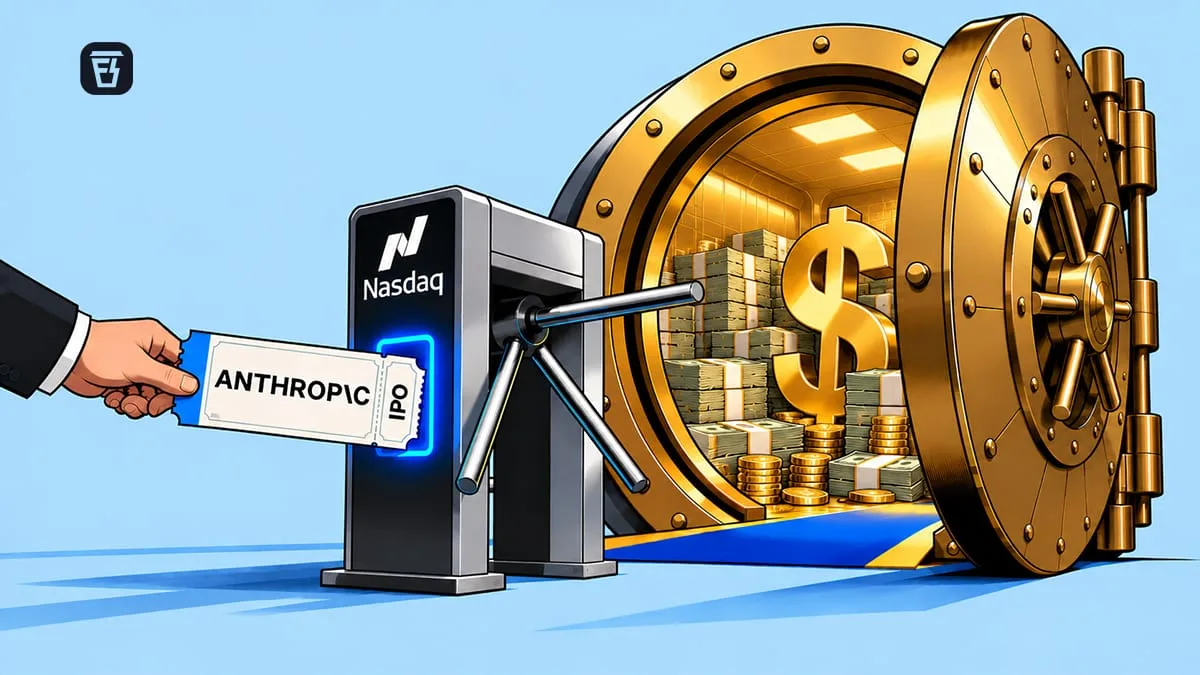
Anthropic's revenue surged to $16 billion in H1 FY26, but it reported a net loss of $80 billion.
The company's governance structure limits shareholder control, prioritizing long-term AI safety over short-term profits.
Revenue concentration risks arise from dependence on major investors like Amazon and Google.
Anthropic, the AI research lab known for its Claude models, has publicly released its IPO prospectus, drawing attention to its financial trajectory. The company reported a staggering revenue increase, reaching $16 billion in the first half of FY26, a remarkable 1,300% rise compared to the same period last year. However, this growth comes alongside a concerning net loss of $80 billion, highlighting the challenges it faces in achieving profitability.
Historically, Anthropic has focused on developing advanced AI models and creating an ecosystem that encourages businesses to integrate its products into their operations. This includes the Claude Platform, which allows developers to build applications using its AI models, and ready-to-use applications like Claude Code and Claude Cowork. While these offerings have attracted a growing user base, the costs associated with running sophisticated AI systems remain high, contributing to its financial losses.
In FY25, Anthropic reported an operating loss of $8 billion, which narrowed to $693 million in the first half of FY26. Despite the reduction in operating losses, the net loss ballooned due to accounting adjustments related to investor contracts that convert into shares. This adjustment alone accounted for $72 billion of the net loss in H1 FY26. The company's spending on computing and infrastructure, nearly $9 billion in just six months, further exacerbates its financial strain.
The implications of Anthropic's financial situation extend beyond its balance sheet. The company's governance structure, as a Public Benefit Corporation, means that shareholders have limited control over corporate decisions. Founders retain significant voting power, which allows them to prioritize long-term goals, such as AI safety, over immediate financial returns. This approach could foster innovation but may also deter investors seeking quicker returns.
Looking ahead, Anthropic's reliance on a few major customers for revenue raises concerns about its financial stability. With two clients accounting for a quarter of its revenue, any shift in their business strategies could significantly impact Anthropic's earnings. As the company navigates these challenges, it will need to balance its ambitious growth plans with the realities of its financial landscape, making its upcoming IPO a focal point for investors and industry observers alike.